Good sushi tastes clean, mild and gently sweet, not fishy. The rice is lightly sour and sweet, the fish is soft and buttery, the seaweed is toasty and salty, and a touch of wasabi or soy adds the sharpness. Most first-timers are surprised by how delicate it is.
For a long time, I said no to sushi.
Not because I had tried it and disliked it. I simply had a picture in my head: a cold, slippery piece of raw fish that would taste exactly like the fish market smells.
Then one evening, someone at the table pushed a plate towards me and said, “Just one piece. If you don’t like it, you never have to try it again.”
It was a tempura prawn roll. Crisp on the inside, soft on the outside, a little sweet, a little salty.
I ate the second piece before anyone could offer it.
If you have been curious about sushi but a little nervous, this guide is for you. No food-critic language. Just an honest answer to the question everyone asks quietly before their first order.
01First, What Sushi Actually Is
Here is the fact that changes everything: sushi does not mean raw fish.
Sushi refers to the rice: short-grain rice seasoned with rice vinegar, a little sugar and salt. Raw fish served on its own, without rice, is called sashimi.
That means plenty of sushi has nothing raw in it at all. Tempura prawn, cooked crab, grilled eel, sweet egg omelette, cucumber, avocado, even cream cheese. If raw fish is what is holding you back, you can still have a wonderful sushi meal.
02What Each Part of Sushi Tastes Like
Sushi is a balance of a few simple things. Once you know what each one brings, the whole plate makes sense.
The rice: soft, slightly sweet, slightly sour
The rice is the heart of sushi, and in a good restaurant it is served close to body temperature, never fridge-cold. It should be sticky enough to hold together but loose enough to fall apart gently in your mouth. The vinegar gives it a soft tang that keeps every bite fresh.
The fish: buttery, not fishy
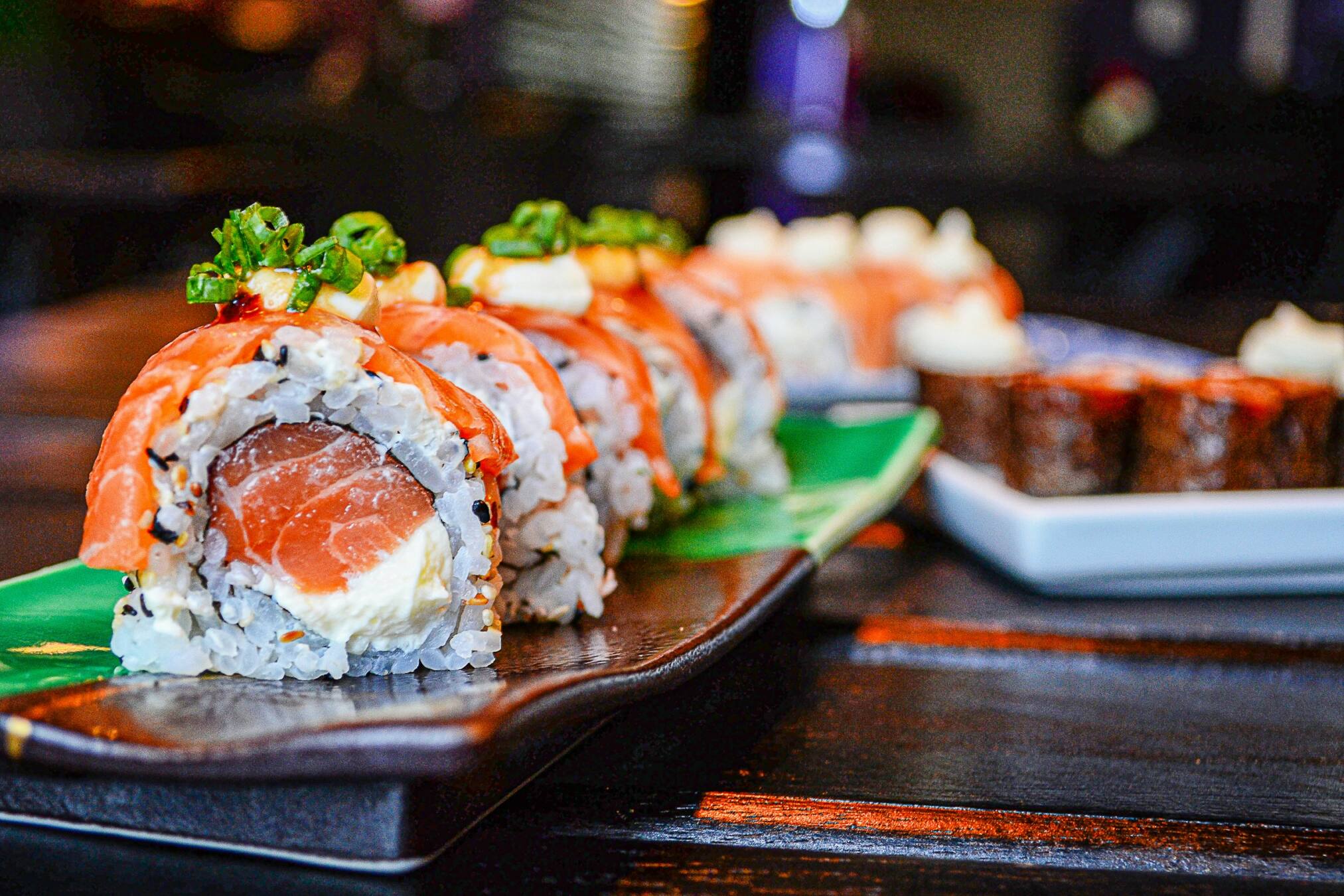
This is the biggest surprise for most people. Fresh raw salmon tastes rich and buttery, almost creamy. Tuna is meatier and cleaner, a little like a very tender steak. White fish is mild and delicate. None of it should taste “fishy.” That strong smell people fear is actually a sign of fish that is no longer fresh.
The seaweed: toasty and savoury
The dark sheet wrapped around many rolls is nori, dried and toasted seaweed. It tastes a little like the sea and a little like roasted crisps: savoury, salty and slightly nutty. Fresh nori has a light crunch; nori that has sat too long goes chewy.
Wasabi: a sharp kick that disappears
Wasabi does not burn like chilli. It rushes up your nose for a few seconds and then vanishes. Use very little. In many restaurants, the chef has already placed a small amount between the fish and the rice.
Pickled ginger: a palate cleanser
The thin pink slices are gari, sweet pickled ginger. They are meant to be eaten between pieces to refresh your mouth, not piled on top of the sushi.
Soy sauce: salt and depth
Soy adds saltiness and that deep savoury flavour known as umami. A light dip is enough. Soaking the rice in soy is the most common first-timer mistake, and it hides everything the chef worked to balance.
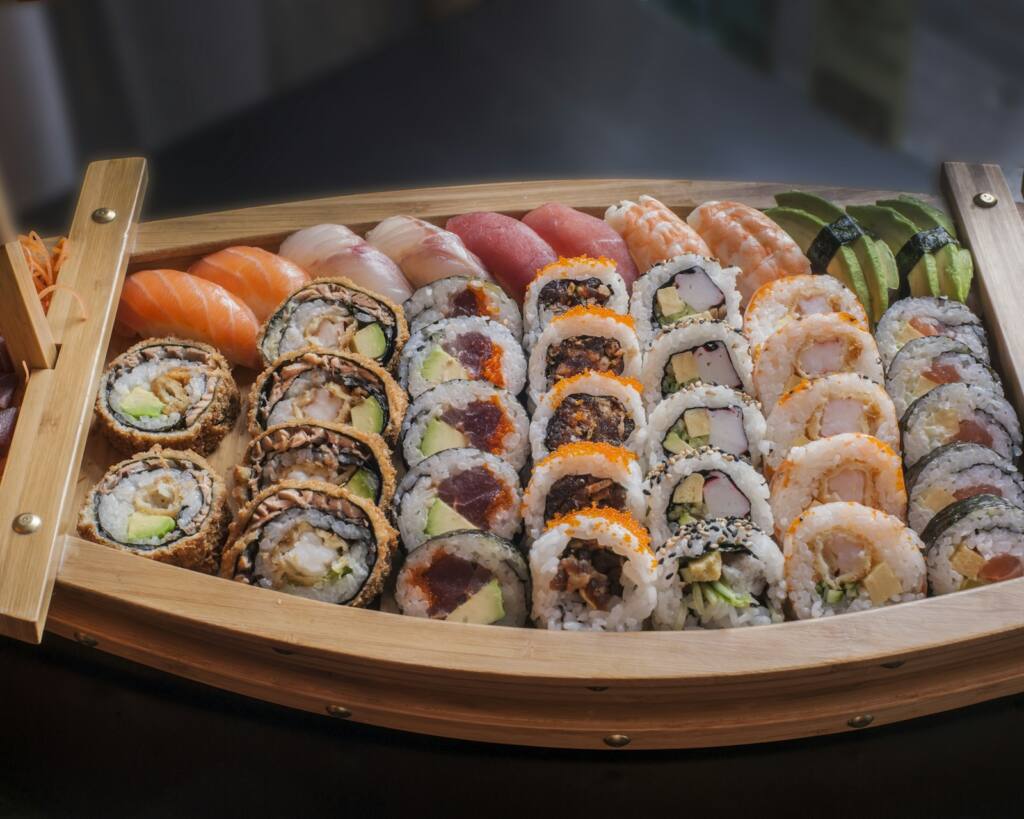
03The Main Types of Sushi You Will See on a Menu
- Maki: rolls with seaweed on the outside, cut into rounds. The most familiar shape.
- Uramaki: “inside-out” rolls with rice on the outside, often coated in sesame seeds or fish roe. The California roll is one.
- Nigiri: a small hand-pressed oval of rice topped with a slice of fish. Simple, and the best test of a kitchen.
- Sashimi: slices of raw fish without rice. Technically not sushi, but always on the same menu.
- Temaki: a hand roll shaped like a cone, eaten with your hands.
04What to Order on Your First Visit
Think of your first sushi meal as a gentle staircase. Start with cooked and familiar flavours, then take one step further.
- Tempura prawn roll. Crunchy, warm and comforting. Almost everyone loves it.
- California roll. Crab, avocado and cucumber. Mild, creamy and completely cooked.
- Cucumber or avocado maki. Light and fresh, perfect for vegetarians.
- Salmon nigiri. Your first raw piece. Salmon is the friendliest place to start because it is soft and rich.
- Tuna nigiri. Once you are comfortable, tuna shows you how clean raw fish can taste.
Sharing a mixed platter is also a wonderful way to begin. Everyone at the table tries a little of everything and finds a favourite without committing to a full order.
05How to Eat Sushi Without Feeling Awkward
- Chopsticks or hands are both fine. Nigiri was traditionally eaten by hand.
- Dip fish-side down. Turn nigiri slightly so the fish, not the rice, touches the soy.
- One bite if possible. Each piece is built to be eaten whole, so every flavour arrives together.
- Ginger between pieces, not on top.
- Ask the chef or server. The best sushi meals we have had began with a simple question: “What would you recommend tonight?”
06How to Tell Good Sushi From Average Sushi
You do not need to be an expert. Your senses will tell you:
- The rice is soft and slightly warm, not hard, dry or cold.
- The fish looks glossy and smells of the sea, never strong or sour.
- The nori is crisp, not rubbery.
- The pieces hold together until you bite, then fall apart easily.
- It does not need a lot of soy to taste good.
07Is Sushi Safe for Children?
Many parents ask us this. Cooked rolls such as tempura prawn, cucumber, avocado or egg are a gentle way to introduce little ones to sushi, and the soft rice is easy to eat. Most doctors recommend avoiding raw fish for very young children and during pregnancy, so the cooked side of the menu is the safe and still delicious choice.
At our table, the cucumber roll disappears first. Every single time.
The biggest lesson sushi taught us had nothing to do with fish.
It was about not deciding we disliked something before tasting it. And once we did try it, it was about not assuming every version of a dish is the same. The same roll can taste completely different in the hands of a different chef.
So if you have been saying no to sushi, try one piece. Start with something cooked. Ask for a recommendation.
You might find, as we did, that the plate is empty before you have finished deciding whether you like it.
Three hearts. One table. Countless stories.
Frequently asked
What does sushi taste like?
Good sushi tastes clean, mild and gently sweet. The rice is lightly sour and sweet from seasoned vinegar, the fish is soft and buttery rather than fishy, and the seaweed adds a toasty, savoury, slightly salty note.
Is all sushi made with raw fish?
No. Sushi means vinegared rice, not raw fish. Many rolls use cooked fillings such as tempura prawn, crab stick, cooked eel, egg or vegetables like cucumber and avocado.
What is the best sushi for beginners?
Start with a California roll, a tempura prawn roll, a cucumber roll or salmon nigiri. They are mild, familiar in texture and easy to enjoy before moving on to raw tuna or yellowtail.
Should sushi smell fishy?
No. Fresh fish smells of the sea, cool and faintly briny. A strong fishy smell is a sign that the fish is not fresh.
How do you eat sushi with soy sauce?
Dip the fish side, not the rice, lightly into the soy sauce. Rice soaks up soy quickly and can fall apart or taste too salty. Eat each piece in one bite if you can.