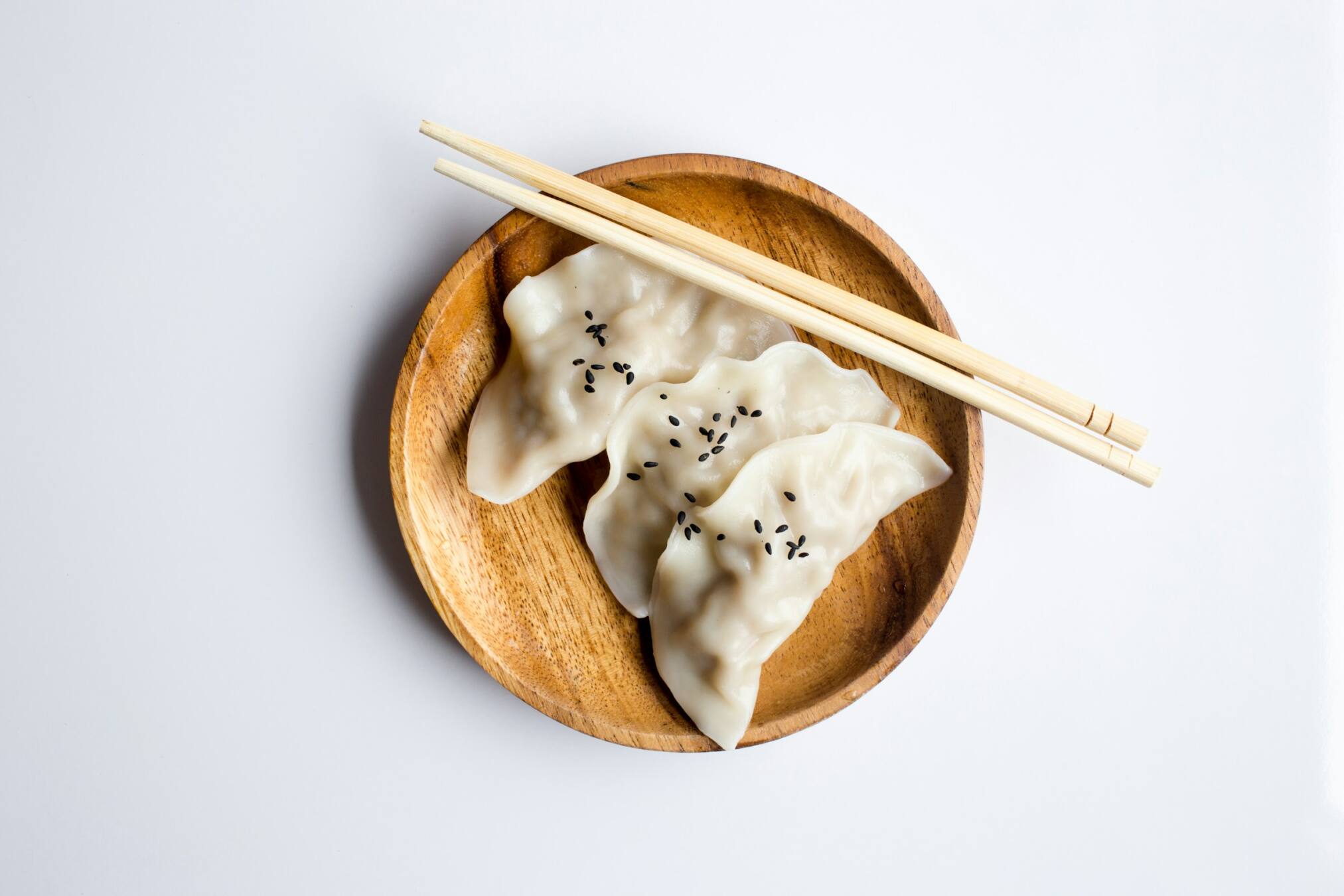
Dim sum is a Cantonese meal of small shared dishes, mostly steamed dumplings, buns and rice rolls. For a first visit, order har gow, siu mai, char siu bao, cheung fun and an egg tart. Plan on three to four dishes per person, order in rounds, and share everything.
Some meals are about one perfect dish.
Dim sum is the opposite.
It is a table slowly filling with little bamboo baskets. Lids lifting, steam rising, everyone reaching across to try “just one” of something. Someone saves the last dumpling for the smallest person at the table. Someone else secretly orders another basket.
It is one of our favourite ways to eat together, because nobody has to commit to a single choice. You simply taste, talk and order again.
But the first time you open a dim sum menu, it can look like a list of words you have never seen. Here is a friendly guide to what they mean.
01What Dim Sum Actually Is
Dim sum comes from southern China, especially Guangzhou and Hong Kong. The name is often translated as “touch the heart,” which says a lot about how it is meant to feel.
It grew out of yum cha, the tradition of “drinking tea.” Travellers and workers would stop at teahouses for a pot of tea, and small snacks were served alongside. Over time, the snacks became the main event.
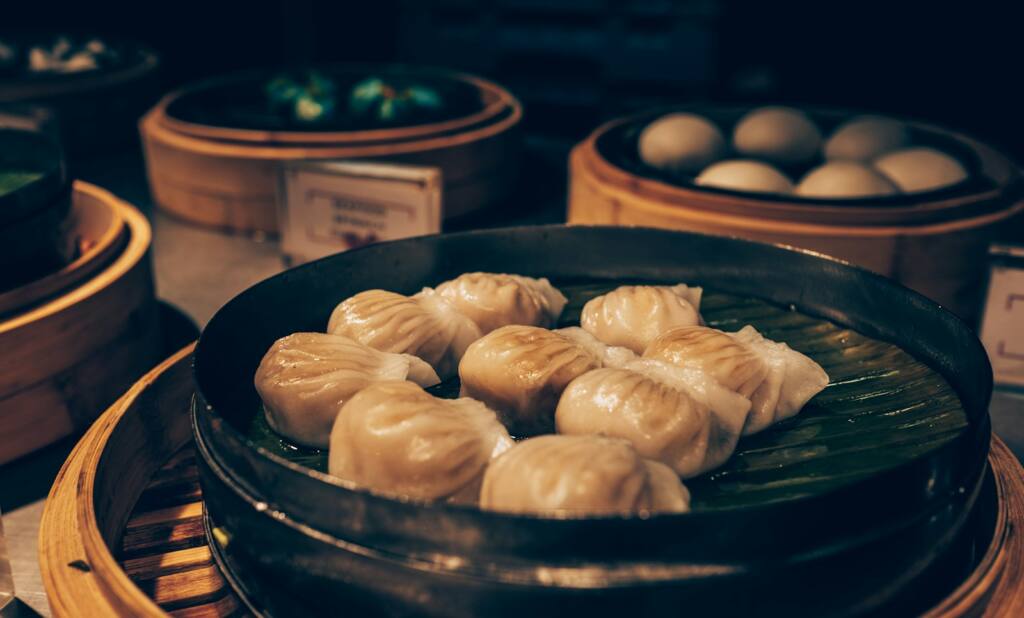
Most dim sum is steamed, but you will also find fried, baked and pan-fried dishes, and even a few desserts. Each basket usually holds three or four pieces, perfect for sharing.
02The Dim Sum Classics You Should Know
Har gow (prawn dumplings)
The one that tests every dim sum kitchen. A translucent, pleated wrapper made from wheat and tapioca starch, wrapped around a juicy whole-prawn filling. A great har gow has a wrapper thin enough to see through yet strong enough to lift without tearing.
Siu mai (open-topped dumplings)
Shaped like a little cup, open at the top, usually filled with pork and prawn and often finished with a dot of orange roe or carrot. Meaty, juicy and satisfying. Chicken and vegetable versions are common too.
Char siu bao (barbecue pork buns)
Fluffy, slightly sweet white buns filled with sticky, sweet-savoury barbecue pork. A baked version with a shiny golden top also exists. Children tend to fall in love with these immediately.
Cheung fun (steamed rice noodle rolls)
Silky sheets of rice noodle rolled around prawns, beef or vegetables, then served with a sweet soy sauce poured over the top. The crispy prawn version, with a crunchy layer hidden inside the soft roll, is one of the most satisfying textures in all of dim sum.
Xiao long bao (soup dumplings)
Technically from Shanghai rather than Canton, but found on most dim sum menus. Each dumpling holds a mouthful of hot broth inside. More on how to eat these safely below.
Lo mai gai (sticky rice in lotus leaf)
Glutinous rice steamed with chicken, mushroom and sometimes sausage, all wrapped in a lotus leaf that perfumes the rice. Filling and comforting.
Spring rolls and wu gok (taro puffs)
The fried side of the menu. Spring rolls are familiar and crisp. Taro puffs have a lacy, crunchy shell around a soft, savoury filling.
Dan tat (egg tarts)
Flaky pastry around a smooth, lightly sweet egg custard. The perfect ending, and the dish most likely to start a quiet negotiation over who gets the last one.
03What to Order for Your First Dim Sum Meal
For two or three people, this order covers every texture without overwhelming the table:
- Har gow
- Siu mai
- Char siu bao (or a vegetable bao)
- Crispy prawn cheung fun
- One fried dish: spring rolls or taro puffs
- Egg tarts to finish
If the restaurant offers a mixed dim sum platter, it is a wonderful starting point. You taste the kitchen’s range in one go, then go back and order more of your favourite.
04What to Skip (At Least the First Time)
Nothing on a dim sum menu is bad, but some dishes are better saved for later visits:
- Too many fried dishes. They fill you up quickly and hide the delicate steamed dumplings that make dim sum special.
- Everything chilli-oil heavy, all at once. Chilli-oil dumplings are delicious, but balance them with milder steamed ones so you can still taste the wrappers.
- Ordering everything in one go. Steamed dishes are best eaten within minutes. Order in rounds.
05How to Eat Dim Sum
- Share everything. Dim sum is not individual plates. Put the baskets in the middle.
- Use the sauces lightly. Soy, chilli oil and black vinegar are there to lift flavours, not drown them.
- Bite soup dumplings carefully. Place one on your spoon, nibble a small hole in the side, let the steam out, sip the broth, then eat the rest.
- Drink tea. Jasmine or oolong cuts through richness, which is exactly why the tradition began.
- Say thank you the old way. In Cantonese tradition, tapping two fingers on the table when someone pours your tea is a quiet thank you.
06Dim Sum vs Momos: Are They the Same?
It is a question we hear often. Both are dumplings, but they come from different traditions. Momos are from Tibet and Nepal, usually with a thicker wheat wrapper and served with a spicy tomato chutney. Dim sum is a Cantonese style of eating, a whole meal of many small dishes, where the dumplings tend to have thinner, more delicate wrappers.
Both are wonderful. They are simply different stories told with similar ingredients.
07Is Dim Sum Good for Toddlers?
It might be one of the best meals for them. Small portions, soft textures and mild flavours. Bao buns and egg tarts are usually instant favourites.
Just remember that steamed fillings hold heat for a long time. Cut dumplings in half, give them a minute to cool, and avoid soup dumplings for very little ones.
We have learned that the joy of dim sum is not in finding the single best dumpling.
It is in the passing. The “you have to try this one.” The basket that comes back empty before you have had your turn. The last piece you quietly leave for someone else.
Order a little. Share a lot. Then order one more round.
That is how dim sum is supposed to be eaten.
Three hearts. One table. Countless stories.
Frequently asked
What is dim sum?
Dim sum is a Cantonese style of eating small dishes, such as steamed dumplings, buns, rice rolls and fried snacks, traditionally served with tea and shared by the whole table.
What are the most popular dim sum dishes?
The classics are har gow (prawn dumplings), siu mai (open pork and prawn dumplings), char siu bao (barbecue pork buns), cheung fun (steamed rice noodle rolls), spring rolls and egg tarts.
How many dim sum dishes should you order per person?
Plan on about three to four dishes per person for a full meal, since each basket usually holds three or four pieces. Order a few at a time and add more as you go.
What is the difference between dim sum and momos?
Momos are Himalayan dumplings from Tibet and Nepal, usually with a thicker wheat wrapper. Dim sum is a broader Cantonese meal of many small dishes, including dumplings with delicate wrappers, buns, rice rolls and desserts.
Is dim sum good for children?
Yes. Steamed buns, prawn dumplings, egg tarts and rice rolls are soft, mild and easy for little hands. Cut dumplings in half and let them cool, as the filling can be very hot.